India · Singapore · Dubai

Where
Strategy
Meets
Growth

A consulting & capability-building firm run by practitioners with 50+ years of combined experience. We partner with organizations, leaders, and learners to build future-ready skills, drive strategic clarity, and enable sustainable growth — in India and beyond.

200+
Engagements
50+
Years Combined
15K+
Trained
3
Global Offices
SkillNexus
Corporate Training & Campus-to-Corporate
Technical, soft skills & custom learning for teams and students
NextLeap Learning
Career Development & Professional Growth
Certifications, mentorship, and job-readiness programmes
StratEdge
Strategy, Leadership & CXO Advisory
High-impact consulting for enterprises and senior leaders
SkillNexusNextLeap LearningStratEdgeD2C StrategyQ-Commerce AdvisoryLeadership DevelopmentMSME GrowthCXO CoachingCampus-to-CorporateRetail TransformationBFSI TrainingStartup Consulting SkillNexusNextLeap LearningStratEdgeD2C StrategyQ-Commerce AdvisoryLeadership DevelopmentMSME GrowthCXO CoachingCampus-to-CorporateRetail TransformationBFSI TrainingStartup Consulting
Our Three Practices

One Firm. Three
Focused Practices.

Nexora operates through three specialized sub-brands — each purpose-built for a distinct client need, unified by one commitment: measurable impact.

Practice 01
SkillNexus
Building Skills for Tomorrow
Focused on skill development and upskilling for corporate teams and students — from campus-to-corporate pipelines to custom learning architectures designed for real business impact.
Explore practice
Practice 02
NextLeap
Your Next Career Move
Supporting individuals through structured career development, certification programmes, mentorship, and job-readiness coaching — from students to mid-career professionals.
Explore practice
Practice 03
StratEdge
Strategy with an Edge
High-impact strategic and leadership consulting for enterprises — CXO advisory, organizational transformation, and go-to-market strategy for India's evolving sectors.
Explore practice
200+
Organizations Served
15K+
Professionals Trained
50yr+
Combined Experience
3
Global Offices
12+
Industry Sectors
Strategy consulting session
How Nexora Adds Value

From Insight
to Implementation

We don't just deliver decks. Nexora embeds itself in your context — diagnosing the real problem, co-building the solution, and staying to ensure it lands. Strategy that works in boardrooms is only half the job. The other half is building the people capability to execute it.

Start a Conversation
Our Approach

Four Principles.
Non-Negotiable.

Industry-Aligned
Every solution is grounded in real-world business needs, not imported frameworks.
Outcome-Focused
We measure success in business results — revenue, capability, speed — not activity metrics.
Custom-Built
No shelf products. Every programme is designed for your organization's specific context.
Future-Ready
Preparing clients for AI, D2C, Q-Commerce, and the new economy of work.
Industries We Serve

Deep expertise across
India's key sectors.

IT & Technology
Retail & E-Commerce
Q-Commerce
D2C Brands
Manufacturing
Franchise & Licensing
Startups & MSMEs
BFSI
Academia & Institutions
NGOs & Development Sector
Consumer Goods
GIZ · USAID · World Bank
Healthcare
Services & Consulting
Client Voices

What our clients
say about us.

★★★★★
"StratEdge helped us rethink our D2C go-to-market completely. Within 8 months we doubled our online revenue contribution."
Raghav Mehta
CEO, Consumer Goods Brand · Mumbai
★★★★★
"SkillNexus transformed how we onboard campus hires. The campus-to-corporate programme cut ramp-up time by 40% in year one."
Priyanka Srivastava
CHRO, Technology Services Firm · Bengaluru
★★★★★
"I moved from a regional role to national leadership in under a year. NextLeap's coaching and certification made it possible."
Ananya Kapoor
National Sales Head · FMCG · Delhi NCR
Strategy
Training
Coaching
Why Nexora

The difference between
advice and results.

01
Strategy + Skills + Execution
Most consulting firms give you strategy. Most training firms give you skills. Nexora gives you both — and stays to help execute. Our three-practice model ensures coherence from vision to action.
02
Practitioners, Not Theorists
Our team has run P&Ls, managed turnarounds, and led transformations inside companies like Trident Textiles, LG Electronics, and Godrej. With 50+ years of combined experience across industries, we draw on scars earned in the field — not cases from business school.
03
Scalable Across Audience
From a first-year professional seeking career direction to a CXO navigating strategic inflection — Nexora has a programme, coach, and approach that fits. One firm, all career stages.
04
India-First, Globally Relevant
Built for Indian market realities — D2C, Q-Commerce, MSME growth, franchise models. But our frameworks and faculty have global credibility across Singapore, Dubai, and beyond.
Our Services

Built for real challenges.
Designed to last.

Three practices. Each purpose-built. All anchored in the same commitment to measurable, lasting impact.

Consulting team
Since 2007
Market Context 2025–26
India's D2C hits $100B. E-retail reaches $60B. Q-Commerce at 40%+ CAGR. Is your organization ready?
Assess Your Readiness
01
Practice 01 · SkillNexus
Building Skills for Tomorrow
Corporate training, campus pipelines & custom learning
As India's workforce navigates AI, automation, and new commerce models, the skills gap has never been more consequential. SkillNexus designs and delivers learning that closes that gap — for corporate teams navigating transformation, and students making the campus-to-career transition.
  • Corporate training — technical & behavioural skills
  • Campus-to-corporate transition programmes
  • Student skill development (final-year focus)
  • Custom learning solutions for L&D teams
  • Manager effectiveness & team capability labs
  • Digital literacy & AI readiness programmes
Target Audience: Students · Early professionals · Corporate teams · L&D leaders
Enquire Now
02
Practice 02 · NextLeap Learning
Your Next Career Move
Career development, certification & mentorship
India produces millions of graduates every year. Most are academically qualified but career-unready. NextLeap bridges that gap — through structured programmes, real mentorship from industry practitioners, and guidance that goes beyond resume formatting.
  • Career development & clarity programmes
  • Professional certification courses (industry-aligned)
  • Job readiness & employability training
  • 1:1 and group mentorship journeys
  • Mid-career pivot & re-skilling support
  • Interview prep & professional brand coaching
Target Audience: Students · Job seekers · Young professionals · Career changers
Enquire Now
03
Practice 03 · StratEdge
Strategy with an Edge
CXO advisory, leadership & organizational transformation
StratEdge works with enterprises navigating growth, disruption, or transformation. We bring strategic rigour with deep contextual knowledge of India's retail, D2C, BFSI, and startup ecosystems — from the inside out. Comparable quality to top-tier firms. Built for India.
  • Strategy formulation & scenario planning
  • Go-to-market for D2C, Q-Commerce & new channels
  • Leadership development for senior cohorts
  • CXO advisory & board-level facilitation
  • Organizational design & change management
  • MSME growth & franchise strategy
Target Audience: CXOs · Senior leadership · Enterprises · Startups · MSMEs
Enquire Now
04
Cross-Practice · Development Sector
NGO & Development Sector
GIZ · USAID · World Bank · UN Partners
Nexora works with development organizations to design and implement capability-building at scale — from rural livelihood training to institutional capacity development. We understand accountability frameworks, M&E requirements, and community contexts that make development programmes succeed.
  • Livelihood & vocational training design
  • Institutional capacity building
  • Training-of-trainer (ToT) programmes
  • M&E framework design
  • Grant programme management support
Target Audience: NGOs · Development agencies · Government bodies · Institutions
Enquire Now
Market Intelligence 2025–26

Markets we help
our clients navigate.

Nexora's advisory is anchored in real market data. Here's what we're watching — and helping clients act on.

Trend 01
$100B
India D2C Market by 2025

270M+ online shoppers. Deep tier-2 city penetration. Brands need strategy, capability, and speed to capture this wave.

Source: Mordor Intelligence / Statista, 2025–26
Trend 02
40%+
Q-Commerce CAGR Through 2030

10-minute delivery has reset consumer expectations across urban India. Reshaping supply chains, talent, and strategy simultaneously.

Source: Bain & Company India, 2025
Trend 03
35–37%
GenAI Retail Productivity Boost by 2030

EY India projects AI lifting retail productivity by 35–37%. 48% of Indian businesses running GenAI PoCs. Skills gap widening faster than training can close it.

Source: EY India 'The AIdea of India', 2025
Trend 04
78%
Tier-2/3 Smartphone Penetration

150M new digital consumers from tier-2/3 cities in 2024. Brands that can't reach regional markets are missing the next wave of Indian growth.

Source: Mordor Intelligence, 2026
Trend 05
$345B
India E-Commerce by 2030

India's e-commerce market will nearly triple to $345B by 2030. Strategic and capability interventions needed now to compete in this digital-first future.

Source: IBEF, 2025
Trend 06
60%+
Tier-2 Share of E-Commerce Transactions

In India's 2024 festive season, 60%+ of e-commerce transactions came from non-metro markets. Different playbooks needed for talent, leadership, and strategy.

Source: Indian Retailer / Bain India, 2025
Our Offices

Global reach.
Local depth.

New Delhi
Headquarters · India
Our founding office and primary delivery hub. Home to StratEdge leadership, SkillNexus operations, and the NextLeap team. Serving clients across North India and nationally.
Singapore
Asia Pacific Hub
Serving multinationals entering India and Indian organizations expanding into SEA. Focus on leadership development and cross-border strategy advisory.
Dubai
Middle East Hub
Supporting the Indian diaspora business community and GCC enterprises seeking India market entry, talent development, and organizational advisory.
"The gap between strategy and execution is almost always a people problem."
Nexora's founding belief
Our Story

Built from practice,
not theory.

Nexora was built by practitioners — people who had spent decades inside organizations before they started advising them. The team carries 50+ years of combined experience across strategy, brand, GTM, learning design, and organizational transformation.

We kept encountering the same costly gap: organizations with powerful strategies but people not equipped to execute them. Training programmes measuring attendance instead of impact. Leaders promoted for technical excellence but left without the tools for organizational complexity.

Nexora was built to close that gap — bringing rigorous strategic consulting together with deep expertise in capability-building, leadership development, and career acceleration. Our work is grounded in sectors we know from the inside: Consumer Goods, Appliances, Retail, D2C, BFSI, Textiles, and more.

A defining part of our perspective is India-first thinking. Direct immersion in rural markets across 12,000+ villages reinforced a core belief: India and Bharat are different, yet deeply interconnected. Understanding that distinction — in consumer behaviour, in talent, in distribution — is what makes Nexora's advice concrete rather than theoretical.

Where We Sit

Inspired by the best.
Distinct in our approach.

We've studied how India's finest consulting and training firms are positioned. Nexora's differentiation is clear: we uniquely integrate strategy, skills, and execution for mid-market India.

Peer · Strategy Consulting
Technopak Advisors
India's leading consumer & retail consulting firm. Deep sector expertise, strong thought leadership, "concept to commissioning" philosophy. Predominantly serves large enterprises.
Nexora difference: We add the human capability layer — training and leadership development — that pure strategy firms don't offer.
Peer · L&D & Training
Aptech / NIIT
Established Indian training brands with scale, curriculum depth, and institutional credibility. Strong in IT and vocational training. Less strong in bespoke corporate and leadership work.
Nexora difference: We bring strategic consulting insight into every training engagement — not just content delivery.
Peer · Leadership & Advisory
Deloitte / EY (India boutiques)
Global brand credibility, strong for large-cap enterprise mandates. Expensive, often template-driven, less accessible to mid-market, startups, and MSMEs.
Nexora difference: Comparable quality of thinking at a fraction of the cost — with India-first context global firms can't match.
What We Stand For

Four values.
No exceptions.

01
Substance over style
Every recommendation must work in the real world, not just in a slide deck. We design for lasting impact, not impressive-looking deliverables.
02
Context before content
Every engagement begins with genuine diagnosis. We don't arrive with a solution — we arrive to understand. Only then do we build.
03
Honest partnership
We say what needs to be said, even when uncomfortable. Clients hire us for clarity, not for validation of decisions already made.
04
Build capacity, not dependency
Success means clients need us less over time — not more. We transfer knowledge and tools so organizations stand on their own.
The Team

Practitioners first.
Always.

Kuldeep Verma
Founder & Managing Consultant
Kuldeep Verma
Business Strategy · GTM · Brand & Operations

Working at the intersection of strategy, brand, and go-to-market for over three decades. Kuldeep has partnered with promoters, CXOs, and leadership teams across Indian and multinational organizations — from Trident Textiles and LG Electronics to Godrej and a range of startups and MSMEs. He brings sectoral depth across Consumer Goods, Appliances, Textiles, Retail, and D2C — with hands-on experience in growth strategy, omnichannel, franchise formats, and last-mile execution. IIM Lucknow alumnus. Certified Management Practitioner. Awarded the Guinness World Record for bridging the urban-rural divide and driving mass-level adoption of organised franchising in rural Bharat.

LinkedIn ↗
Rohan Mehta
R
Rohan Mehta
Principal Consultant · StratEdge
25 years building and fixing P&Ls across FMCG, Retail, and Consumer Electronics. Rohan has led category strategy at two of India's largest consumer goods companies and advised promoter-led businesses on inorganic growth, franchise scale-up, and distribution redesign. His particular strength is translating market opportunity into executable GTM architecture — pricing, channel mix, portfolio sequencing. He has worked across Tier-1 and Tier-2 markets and brings a rare ability to hold both the strategic and the operational in the same conversation.
Shalini Nair
S
Shalini Nair
Head of Capability Design · SkillNexus & NextLeap
Organisational psychologist and ICF-certified coach with 18 years in human capital. Shalini has designed learning architecture for large-scale capability rollouts across Banking, IT Services, and Consumer sectors — including a flagship first-time manager programme deployed across 4,000+ employees at a Fortune 500 firm. She brings a forensic understanding of adult learning behaviour, blended delivery formats, and the gap between classroom performance and on-the-job application. At Nexora, she leads curriculum design, facilitator quality, and outcome measurement for all SkillNexus and NextLeap engagements.
Vikram Anand
V
Vikram Anand
Senior Advisor · Leadership & Organisational Transformation
Former Business Head and VP-HR at two large Indian conglomerates, with three decades spanning Manufacturing, Textiles, and B2B Services. Vikram has managed full workforce transformations during mergers, led competency framework redesigns for 10,000+ employee organisations, and coached C-suite leaders through succession and role transition. He advises Nexora clients on leadership readiness, talent architecture, and the human side of business transformation — questions that rarely appear in strategy decks but determine whether change actually lands.
Thought Leadership

Nexora Insights

Original thinking from our practitioners — on consumer behaviour, Indian market dynamics, leadership philosophy, and the future of business strategy. Grounded in 50+ years of combined field experience.

Kuldeep Verma
Kuldeep Verma
Management Consultant · Strategy & GTM
Business Strategy, Growth & GTM | Brand, Sales & Operations Transformation | Analytics, AI Enablement
Smart home appliances future
Smart Ecosystems · Featured
Kuldeep Verma
Kuldeep Verma
January 26, 2026 · Published on LinkedIn
Read on LinkedIn ↗

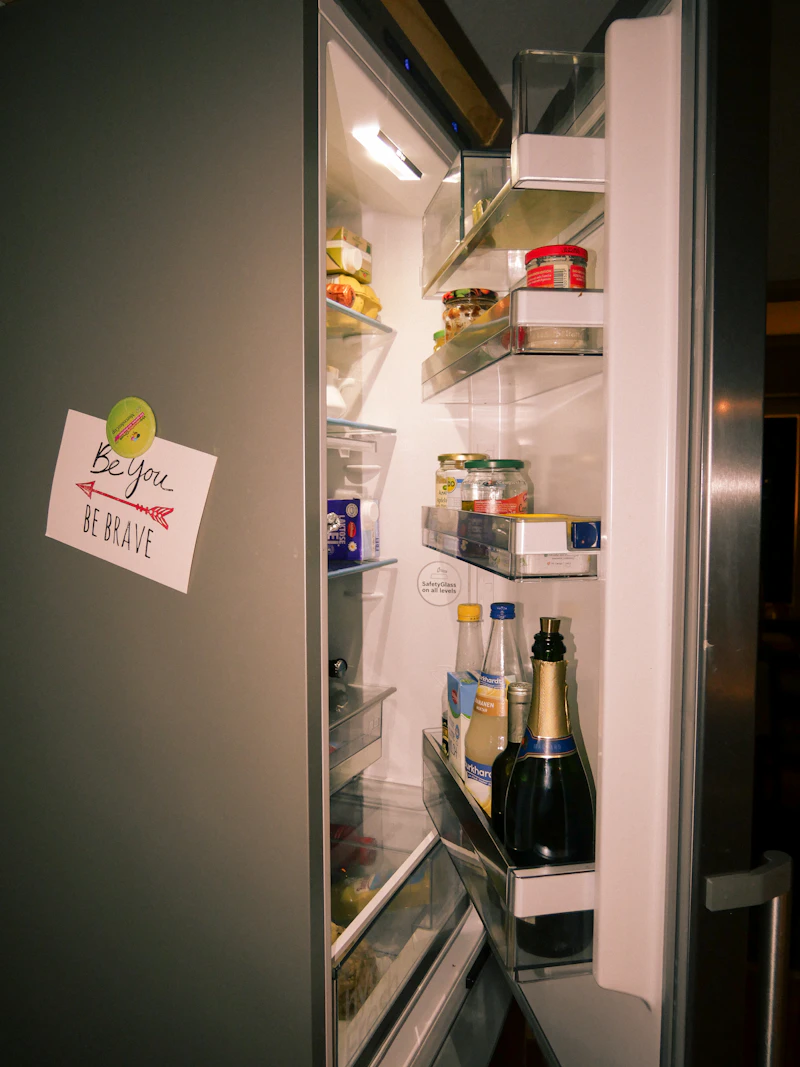
Why Your Next Fridge Might Know You Better Than You Know Yourself

What if your refrigerator ordered groceries before you realised you were out of milk? Or your television reminded you to hydrate between episodes of your favourite show? Welcome to the future of home appliances — where devices stop behaving like machines and begin acting as intelligent allies in everyday life.

Having spent years observing how appliances quietly shape human behaviour — and how human behaviour reshapes appliances — it is time to change gears and prepare for what is coming next.

"You think it's science fiction? It is the next competitive battleground for appliance brands, and it is already unfolding inside homes across the world."

The Rise of the Thinking Home

For more than a decade, the industry has spoken about "smart homes." However, in reality, most homes today are merely connected rather than genuinely intelligent. The next phase is the thinking home.

Thinking homes are ecosystems in which appliances do not simply respond to commands. They learn from usage patterns, anticipate needs, and collaborate with one another. In practical terms, this means:

  • Refrigerators that understand consumption habits and manage replenishment proactively
  • Televisions that evolve into lifestyle interfaces integrating entertainment, wellness, and commerce
  • Ovens that dynamically adjust cooking recommendations based on nutrition goals and past behaviour

In this environment, appliances no longer wait for instructions. They participate in decision-making alongside the user.

Consumer Behaviour Is Rewiring the Industry

The modern consumer is no longer purchasing a product alone. They are purchasing convenience, outcomes, and time saved. This shift is forcing a fundamental rethink across the industry — from product design and business models to marketing and engagement strategies.

From Ownership to Access

Traditional ownership models are giving way to access-based consumption. Appliance-as-a-Service offerings are gaining traction, allowing consumers to subscribe rather than purchase outright. Installation, maintenance, upgrades, and replacement cycles are bundled into predictable monthly pricing. For consumers, this offers flexibility and lower friction. For manufacturers, it enables recurring revenue streams and long-term relationships that extend well beyond the initial sale.

Hyper-Personalisation as the New Baseline

Tomorrow's appliance retail experience will not be browsed; it will be predicted. Washing machines that recommend consumables, ovens that suggest meals based on available ingredients, and televisions that shape viewing routines are early signals of predictive commerce powered by artificial intelligence and real-time data. In this future, the appliance itself becomes the storefront.

Conscious Consumerism as a Deciding Factor

Growing consciousness towards energy efficiency, repairability, and recyclability are no longer secondary considerations. Consumers are actively comparing brands based on measurable sustainability outcomes rather than marketing claims. Brands that can demonstrate environmental responsibility through data and transparency will outperform those that rely solely on messaging.

Marketing in the Smart-Home Era

As homes become more intelligent, marketing must become more precise and experience-led. Virtual discovery is replacing static catalogues. Augmented and virtual reality allow consumers to visualise appliances within their own living spaces, test ecosystem compatibility, and understand functionality before purchase.

Equally important is a shift away from specification-driven communication. Traditional feature–advantage–benefit frameworks are losing relevance as consumers increasingly respond to narratives that demonstrate lived experiences rather than technical attributes.

Connected appliances also generate high-quality first-party behavioural data. Used responsibly, this data enables meaningful conversations with consumers — communicating energy savings achieved or waste reduced. These interactions build trust and emotional loyalty that price schemes and discounts cannot.

Emergence of a New Value Chain

  • Manufacturers are evolving from hardware producers into service and ecosystem builders, with increased focus on software, data ethics, and long-term engagement.
  • Retailers are shifting from transactional selling to immersive experience design, helping consumers understand how connected products work together in real-life settings.
  • Consumers gain convenience and personalisation but must remain conscious of data privacy, as personal data increasingly becomes a form of currency.
  • Utilities and service providers are leveraging connected appliance data to optimise energy usage, blurring the line between technology companies and traditional utilities.

From Smart to Sentient

The industry is moving steadily from smart homes to sentient environments that adapt, learn, and evolve over time. In this future, purchasing a refrigerator or television will feel less like a transaction and more like joining a lifestyle network.

"The future of appliances is not defined by individual devices but by the ecosystems built around them. Manufacturers are becoming service innovators. Retailers are becoming storytellers. Consumers are becoming co-designers of their living environments. We are no longer simply buying machines. We are teaching our homes how to live with us."

If you are building or rethinking the future of appliances, smart homes, or connected ecosystems, this conversation will define the next decade for the industry. The question is not whether this future arrives — but who leads it.

About the Author

Kuldeep Verma is a strategy and transformation professional with deep experience at the intersection of consumer behaviour, technology, and large-scale businesses. His work focuses on helping organisations navigate inflection points driven by connected ecosystems, data-led personalisation, and shifting ownership models. He brings a practitioner's lens to topics often discussed theoretically, grounding future-facing ideas in commercial reality. He actively engages with leadership teams on questions of growth, portfolio strategy, customer experience, and organisational readiness for the next decade of smart and thinking homes.

Indian consumer behaviour
Consumer Behaviour · India
Kuldeep Verma
Kuldeep Verma
August 31, 2020 · Published on LinkedIn
Read on LinkedIn ↗

We Indians Are Strange Consumers!

Why did the microwave oven succeed where the vacuum cleaner struggled? Why did a pandemic in seven months reshape cleaning habits more than the previous twenty-five years combined? The answers reveal something profound about the Indian consumer psyche.

The Microwave vs. The Vacuum Cleaner — A Tale of Two Adoptions

Fast Adoption
Microwave Oven
India adapted to the MWO as a cooking gadget rapidly and went through a fast adoption cycle. The rationale was compelling: with both husband and wife working and household income doubling, it answered real needs — no time for daily chores, affordability, more time for kids, a comfortable lifestyle.
Slow Adoption
Vacuum Cleaner
The same dual-income, time-poor rationale that served the MWO was never applied to vacuum cleaners. Strangely, the logic that justified one convenience never transferred to the other — even though the functional benefit was identical.

The Cultural Lens: Cooking vs. Cleaning

The advent of the MWO in the house gave culinary access — and skills — to the male members of the household (husbands, sons), thereby increasing their experience and walk-through to the idea of cooking. The kitchen, long a female domain, quietly became gender-neutral through the proxy of a machine.

However, the ritual of cleaning and mopping continued to be culturally seen as a woman's prerogative. We don't know if that can be termed as an entry barrier — but for the job of cleaning in the last several years, the task had moved from one woman (the lady of the house) to another (the maid servant). The category of vacuum cleaners may have paid the price. The early exits of Hoover and Eureka Forbes from the vacuum cleaner segment may well carry traces of this cultural resistance.

"We don't know if that can be termed as an Entry Barrier, for the job of cleaning in the last several years has moved from one woman (lady of the house) to another (maid servant)."

Then Came the Pandemic — and Everything Changed

What we do know is that the cleaning habits of Indian consumers changed in the seven months following the pandemic outbreak more than they did in the previous twenty-five years combined.

The function of mopping, cleaning, and sweeping became gender-genre-work agnostic. The participation of the male fraternity increased exponentially. So deep was this sudden behavioural change that what was never a contactless phenomenon was now being sought as a touchless activity — buharna (sweeping) had always meant cleaning by touch.

The Strategic Implication
"The trend favoured manufacturers in the robotic and touchless cleaning space — and household vacuum cleaner businesses such as Milagrow."
However, one needs to carefully watch consumer habits as the fear psychosis arising out of the pandemic may die as soon as the vaccine arrives. The question for brands: how much of this shift is structural, and how much is situational?

What This Tells Us About the Indian Consumer

The Indian consumer defies easy categorisation. They are simultaneously rational and ritualistic, aspirational and tradition-bound. Understanding which cultural scripts govern a product category is not a soft insight — it is a hard commercial variable. The MWO succeeded not just because it was convenient, but because it fit a narrative that the culture was ready to accept. The vacuum cleaner stumbled not because it was less useful, but because it confronted a cultural assumption nobody was willing to examine.

For brands and strategists operating in India, the lesson is clear: the product's logic is not enough. The cultural permission must be earned — or waited for.

About the Author

Kuldeep Verma is a management consultant specialising in business strategy, growth, and go-to-market transformation. He brings a practitioner's perspective to consumer behaviour, brand strategy, and organisational change — grounded in years of direct engagement with India's leading businesses across retail, consumer goods, and BFSI sectors.

Leadership and strategy
Leadership · Thought Leadership
Kuldeep Verma
Kuldeep Verma
Corporate Leadership Series · Nexora Insights

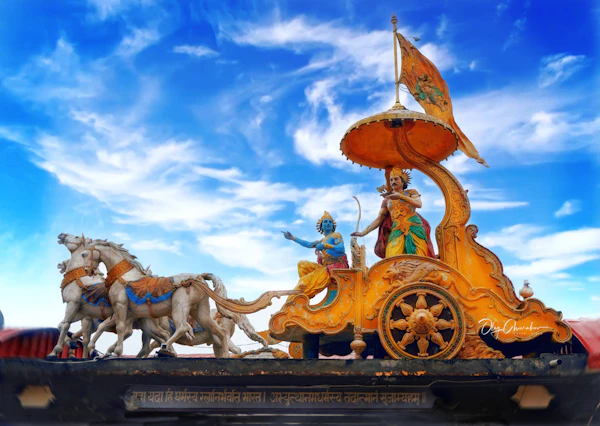
Kurukshetra & Corporate Leadership

"The Mahabharata's battlefield is a metaphor that has survived 5,000 years because it describes something that never changes — the leader's inner conflict when the stakes are highest."

Every leader eventually faces their Kurukshetra — that defining moment where the path is unclear, the pressure is immense, the relationships are complex, and the cost of both action and inaction seems unbearable. Arjuna's crisis on the battlefield of Kurukshetra is not merely mythology. It is a precise psychological portrait of leadership paralysis that plays out in boardrooms, strategy sessions, and performance reviews every single day.

"Modern organizations operate in an environment that resembles a battlefield: volatile markets, complex stakeholder expectations, internal conflicts, tight deadlines, and constant uncertainty. Leaders must navigate this terrain with clarity, ethics, and strategic intelligence."
🎯 Lesson 1
Purpose (Dharma) as Leadership Anchor
Purpose stabilizes leaders amidst chaos. When pressure mounts and choices are ambiguous, clarity of values is the only reliable compass. Mission-driven leadership — where the "why" is deeply internalized — produces decisions that survive scrutiny over time, not just in the moment.
⚖️ Lesson 2
Ethical Decision-Making
The Mahabharata's moral dilemmas are strikingly modern. Choosing long-term trust over short-term wins, taking responsibility even when decisions are costly, communicating transparently — these are not just ethical imperatives. They are strategic ones. Organisations that compromise on ethics rarely sustain performance.
🧩 Lesson 3
Strength-Based Teams: The Pandava Model
The Pandavas won not because each member was individually invincible, but because each member's strengths were deployed strategically. The corporate parallel is exact: identify individual competencies, assign roles based on strengths, promote collaboration over internal competition, and build cross-functional coherence. Weakness becomes irrelevant when strengths are well-placed.
🔄 Lesson 4
Adaptive Strategy
The daily battlefield formations in the Mahabharata — the Chakravyuha, the Garuda formation — were not fixed plans imposed in advance. They were responses to evolving conditions. Today's organizations that treat strategy as a static document rather than a living response to reality are fighting yesterday's battle. Review, revise, respond.
🧘 Lesson 5
Emotional Regulation
Krishna does not begin teaching Arjuna tactics. He begins by addressing Arjuna's emotional state. This sequencing is instructive. A leader who cannot manage their internal state cannot make sound external decisions. Managing stress, pausing before reacting, maintaining composure in crisis — these are not soft skills. They are leadership prerequisites.
🦁 Lesson 6
The Leader's Courage
Arjuna's crisis is not a lack of skill — it is a crisis of will. He knows what needs to be done; he cannot bring himself to do it. Leadership demands the courage to act in uncertainty, to take responsibility for difficult decisions, and to stand by ethical choices even when they are costly. Decisiveness and moral courage are not personality traits. They are disciplines.

The Inner Kurukshetra — The Only Battle That Matters

The Bhagavad Gita's deepest insight is that the outer battlefield is a projection of the inner one. Arjuna's paralysis is not caused by his enemies — it is caused by his confusion about who he is, what he stands for, and what his responsibility demands of him. When leaders conquer that inner confusion — about purpose, about ethics, about identity — the external challenges become navigable.

The Nexora Leadership Philosophy
"When leaders conquer the inner Kurukshetra, the outer world aligns with purpose."
This framework underpins Nexora's leadership development work. Whether we are designing a first-time manager programme or advising a C-suite team navigating a transformation, the questions are always the same: What is the purpose here? What does ethics demand? Are the right people in the right roles? Is our strategy adapting fast enough? Are we leading from composure or from reaction? Do we have the courage to act?

How Nexora Uses This Framework

At Nexora, we have developed a leadership coaching and workshop framework — The Kurukshetra Leadership Model — that uses these six lessons as diagnostic and developmental tools for leadership teams. It is particularly effective in high-pressure environments: organizational transformations, M&A integration, rapid growth phases, and leadership succession contexts.

The framework resonates especially well in the Indian corporate context, where Mahabharata references carry deep cultural fluency — and where the themes of dharma, stakeholder complexity, and strategic dilemmas are lived every day.

Appliances timeline India
Long Read · Consumer Research
Kuldeep Verma
Kuldeep Verma
2025 · Consumer Industry Research · Published on LinkedIn

The Changing Face of Home Appliances Buying in India: 1950 → 2100

How Indian homes went from the Black-and-White TV era to AI-driven smart ecosystems — and what the next 75 years will look like for retailers, brands, and strategists.

Post-Independence India was building its industrial base. Electricity access was limited; only affluent or urban households owned home appliances. Buying decisions were heavily influenced by availability, price, and brand reliability — often imported or government-controlled. What followed was one of the most fascinating consumer behaviour journeys the world has seen.

1950–1980 · Era of Scarcity
Foundations — Discovery & Status
Very few households had TVs; Doordarshan broadcasts were limited. Single-door fridges from Kelvinator, Godrej, Allwyn. Buying often involved waiting lists or government approvals. Appliances were rare, aspirational, built to last decades. A purchase was a once-in-a-generation family event.
1980–2000 · Liberalisation
Colour Revolution & Middle-Class Rise
Colour TVs arrived after the 1982 Asian Games. Cable TV boom drove household upgrades. Double-door fridges became aspirational. Fully-automatic washers emerged. EMI culture was born. Brand trust and service remained king. Replacements were rare — one TV lasted a decade.
2000–2010 · Consumerism
Organised Retail & Lifestyle Upgrades
LG, Samsung, Sony entered aggressively. BEE energy ratings influenced purchasing. Croma, Vijay Sales, Reliance Digital emerged. EMIs, festive discounts, and after-sales service became central. Consumers began to "upgrade" rather than replace — a fundamental psychological shift.
2010–2025 · Smart Connectivity
Omnichannel Explosion & AI Integration
LED, Smart, 4K TVs became mainstream. Inverter compressors, Wi-Fi fridges, AI washer cycles. E-commerce at ~35% of appliance sales by 2023. ROPO behaviour dominates. Consumers now prioritise smart features, energy-efficiency, and service ecosystems over brand names alone.
2025–2050 · AI-First Living
Subscription Models & Predictive Homes
Inventory-aware fridges reorder groceries automatically. Autonomous washers detect fabric and dirt levels and decide the full cycle. AR/VR showrooms replace physical retail. Subscription appliance models emerge. Sustainability becomes a primary purchase criterion.
2050–2075 · Integrated Smart Homes
Ecosystem Buying — No More Individual Devices
Homes and appliances become inseparable. Fridge + pantry + grocery ordering act as one intelligent food ecosystem. "TVs" morph into immersive AR/VR walls. Washing units recycle and reuse water with nano-materials. You buy a home ecosystem, not individual devices.
2075–2100 · Invisible Appliances
Sentient Homes & Experience Bundles
Appliances disappear into infrastructure. Refrigeration zones embedded in kitchen counters. Display surfaces replace TVs — walls, mirrors, AR contact lenses. Consumers choose "experience bundles" (Wellness Home, Sustainable Kitchen). No physical appliance purchases — service subscriptions dominate entirely.

Three Implications for the Decade Ahead

  • The subscription imperative: Indian consumers are already comfortable with EMI culture. The transition to subscription-based appliances — paying for capability and service, not ownership — is closer than most brands realise.
  • The tier-2 opportunity: The next wave of appliance buyers is not in Delhi or Mumbai. Brands need capabilities, communication, and products tuned for markets where 150 million new digital consumers arrived in 2024 alone.
  • The sustainability shift: By 2030, sustainability credentials will be a substantive purchase criterion. Brands need to embed this into product strategy now — not as a marketing layer, but as a commercial imperative.
Kuldeep Verma
Kuldeep Verma
Author · Nexora Insights

Management consultant at the intersection of consumer behaviour, strategy, and technology. Writing on smart ecosystems, Indian markets, and the future of business.

Follow on LinkedIn ↗
More Insights
Leadership · Featured
Kurukshetra & Corporate Leadership: Six Lessons from the Mahabharata
Nexora Series · 10 min
Leadership
Why India's First-Time Managers Are Being Set Up to Fail
March 2026 · 6 min
D2C Strategy
From Kiranas to Q-Commerce: The Retail Transformation Nobody Planned For
Feb 2026 · 8 min
Career
The MBA Premium is Declining. What Should Young Professionals Do Instead?
Jan 2026 · 7 min
Workforce
AI Readiness in India's Corporate Sector: A Reality Check
Dec 2025 · 5 min
MSME Strategy
Why 70% of India's MSMEs Struggle to Scale Beyond ₹10 Crore
Nov 2025 · 9 min
Follow Nexora on LinkedIn

Weekly insights on Indian business strategy, leadership, and the future of work. 25,000+ followers.

Follow on LinkedIn
Topics
Smart Appliances
Indian Consumer
D2C Strategy
Q-Commerce
Leadership
Retail
MSME
AI & Skills
Culture & Behaviour
Leadership & Dharma
Mahabharata Framework
BFSI
Subscribe to Nexora Insights

Monthly research on Indian business, strategy, and capability — direct to your inbox.

Get in Touch

Every great engagement
starts with a
conversation.

Tell us about your challenge. We respond within one business day — no pitch deck, no sales pressure.

Send us a message

We'd love to hear from you.
Whether you have a brief, a question, or just a challenge you're trying to think through — reach out. No obligation, no pitch decks. Just a conversation.
Headquarters
Gurugram, India
Also present in Singapore & Dubai
Response Time
Within 1 business day
Development Sector
info@nexoraconsult.in
GIZ · USAID · World Bank enquiries welcome
Team collaboration